

The Work Behind the Border: The Invisible Value of a Customs Tax Professional
A shipment crossing a border may take minutes to notice and months of preparation to get right. Between a business decision and goods moving legally lies a profession whose most valuable work is often the least visible.
My professional journey began in accountancy and finance. More than two and a half years working in the Customs domain later, I began to see a side of tax compliance that is easy to underestimate: work that can influence whether a business meets its obligations while keeping goods, assets and operations moving.
I qualified as a Chartered Accountant in 2016. Before moving into Customs-related work, my experience included other finance areas such as receivables, payables and audit-related responsibilities. Each taught me a different way to understand a business, its controls and its financial obligations.
Customs introduced me to a different intersection of responsibilities. The work could involve exemption bonds and their timelines, tax-related matters with Customs authorities, permanent-export papers, certificates linked to duty payments, export-related conditions, stakeholder NOCs, classification questions and litigation-related matters. These responsibilities are connected not only to tax and documentation, but also to the movement and use of goods across borders.
From the outside, some of this work can look like a set of documents and follow-ups. From inside the role, each document can represent a legal requirement, a deadline, evidence that must be assembled or a business consequence that needs to be anticipated. That difference between appearance and responsibility is the subject of this article.
A delayed shipment can stop a conversation across an entire business. A missed condition can turn into a financial exposure. A classification dispute can follow a company long after the goods have arrived. Yet when everything moves on time, almost nobody asks who helped make that possible.
That is one of the curious contradictions of Customs work: the consequences can be highly visible, while the professional effort required to prevent them can remain almost completely out of sight.
To understand why, we need to look beyond the paperwork and into the space where international trade, tax law, regulatory obligations and business operations meet.
02 · The global pictureInternational trade is more than moving goods from A to B
Every cross-border movement sits within a framework of rules. Goods may need to be classified correctly, their value established, duties assessed, permissions checked, conditions fulfilled and supporting records maintained. Depending on the transaction, a company may also need to manage exemptions, bonds, certificates, export obligations or post-clearance questions.
For a business, these are not isolated legal tasks. They connect directly with purchasing decisions, cash flow, inventory, production plans, asset availability and delivery commitments. The Customs professional works at that intersection, translating regulatory requirements into actions the business can actually carry out.
This is why Customs and trade compliance cannot be understood only as a filing function. The work involves interpreting requirements, identifying exposure, coordinating evidence, tracking obligations and helping the organisation make decisions without losing sight of its legal responsibilities.
International frameworks also recognise that Customs has a dual responsibility: legitimate trade should be facilitated, while compliance and revenue requirements must still be protected. The World Customs Organization’s overview of Customs procedures and trade facilitation provides useful context for this balance.
03 · The work itselfWhat does a Customs tax professional actually have to hold together?
The exact responsibilities vary by country, industry, business model and role. But in many organisations, the work can involve several connected threads at once:
Duty exemptions and conditions
Understanding whether an exemption applies, checking its conditions, tracking timelines and making sure the business can demonstrate compliance when required.
Bonds and obligations
Preparing or monitoring bonds, maintaining visibility over due dates and ensuring that an obligation does not quietly pass its deadline.
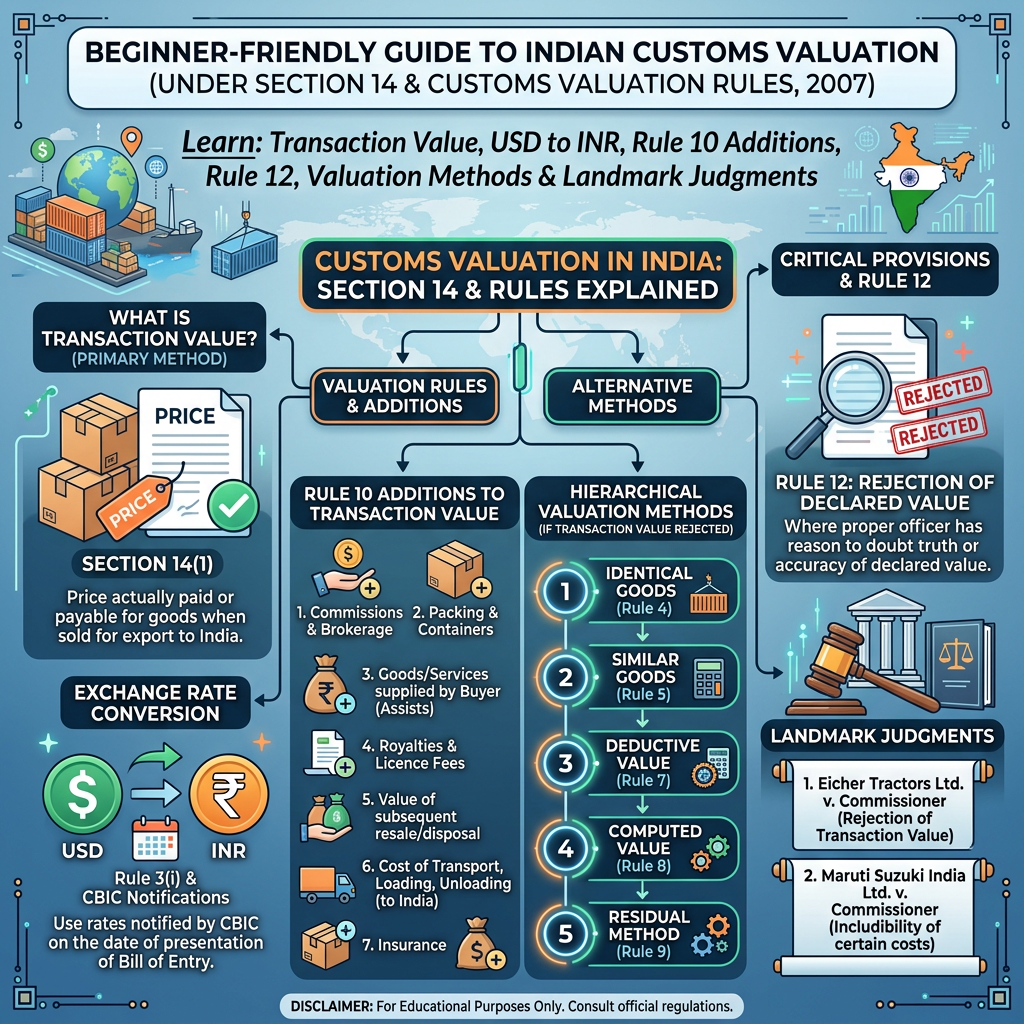
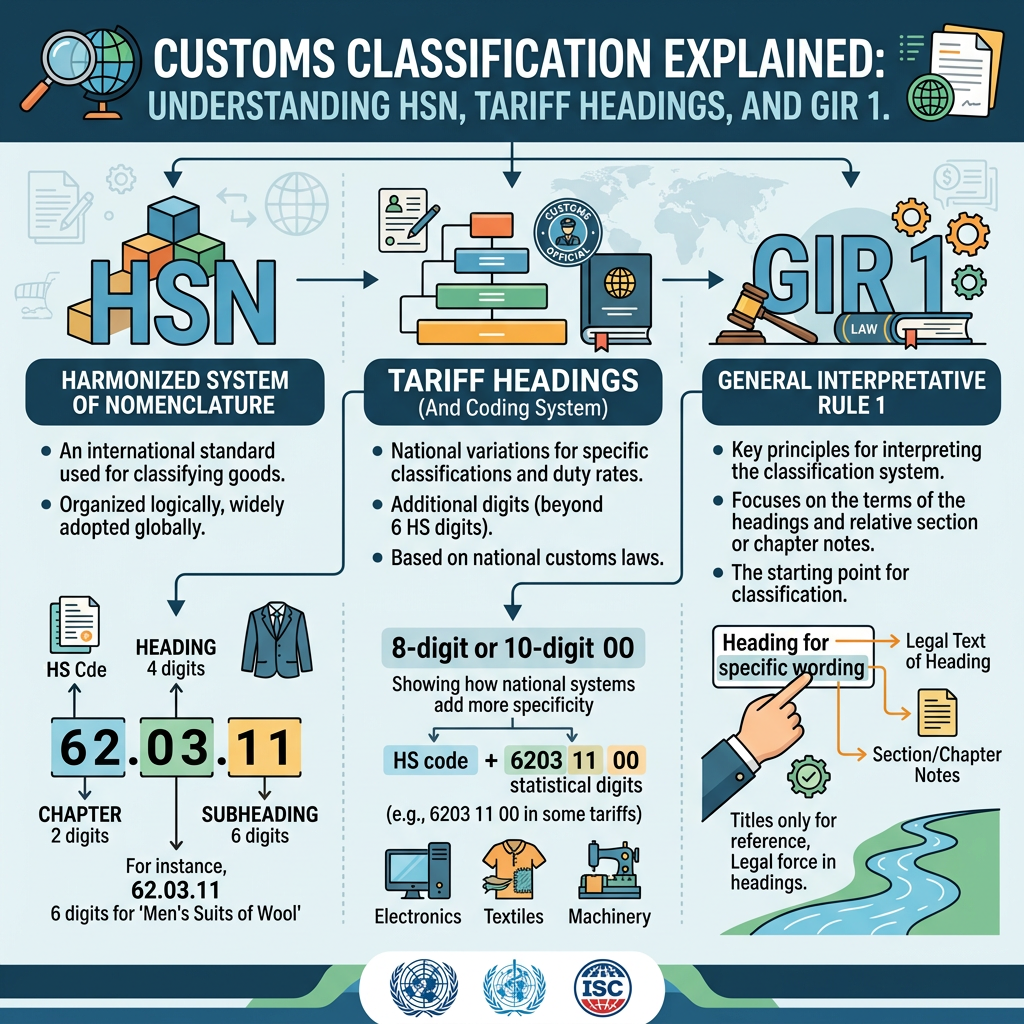
Classification and valuation
Working through technical facts, tariff descriptions, transaction details and supporting documents where a conclusion can influence duty liability and compliance exposure.
Exports and certificates
Coordinating export-related conditions, permanent-export documentation and certificates that may be needed to support a tax or regulatory position.
NOCs and stakeholder coordination
Collecting inputs from teams that hold different pieces of the picture, aligning timelines and following through until the requirement is actually closed.
Queries, disputes and litigation
Helping resolve questions raised by authorities, organising records and supporting the company’s position through technical or legal proceedings.
These activities may appear separate on a task list. In practice, they can be tightly connected. A missing input from one team can hold up a submission. A misunderstood condition can create work months later. A technical question may need input from finance, procurement, engineering, legal, logistics and external advisers before the company can respond confidently.
The job is not simply to prepare a document. It is to understand what the document is meant to establish, which facts support it, whose input is needed, what deadline applies and what could happen if the obligation is not met.
04 · The pressure pointsWhy the role can be harder than it looks
1. The deadline may belong to the business, not just the file
A Customs-related requirement can be linked to an import schedule, an export commitment, the availability of equipment or the fulfilment of an exemption condition. The professional may be working with a legal or procedural timeline while the business is working with an operational one. Both clocks matter, and they do not always move at the same speed.
2. The information is rarely in one place
One team may know the technical details. Another holds invoices or payment information. A different team may control the asset, shipment, contract or export record. The Customs professional often has to bring those separate pieces together into one coherent, supportable position.
3. The answer is not always obvious
Classification, valuation, exemption eligibility and the interpretation of a condition may require careful reading of the applicable law, documents and facts. A quick assumption can be tempting when a deadline is close, but a defensible conclusion often needs more than a quick search or a familiar precedent.
4. Closing the task may not close the obligation
Some requirements continue after clearance or after a document has been submitted. Conditions may need to be monitored, records retained, evidence collected or follow-up action completed. The work therefore includes looking ahead, not only reporting what has already happened.
5. The cost of a small miss can be disproportionate
The impact depends on the transaction, but a missed deadline or unresolved requirement can mean additional duty exposure, interest, penalties, a dispute, delayed movement or extra management attention. The professional has to notice the small detail before it becomes a much larger business problem.
Responsibility without complete control
One of the role’s most demanding features is that the Customs professional may be accountable for coordinating a deadline while depending on facts, approvals or evidence held by several other stakeholders. Progress requires influence, persistence and clarity, not just technical knowledge.
05 · The visibility gapWhy successful Customs work can look like no work at all
Many business measures naturally capture visible events: a query received, a shipment delayed, a document submitted, a case escalated or a payment made. Preventive work is harder to count. The deadline that was not missed, the incomplete record that was chased in time, the issue clarified before submission and the potential dispute that never developed may not appear as a headline in any report.
When the outcome is smooth, it can seem as if the process was simple. But a smooth outcome may be the result of careful tracking, repeated follow-ups, technical review and coordination that took place quietly over days or weeks.
What the business sees: an import proceeds, a required certificate is available, an exemption condition remains on track, or a query is answered within the required time.
What may sit behind that result: checking the applicable condition, reviewing the records, asking another team for missing evidence, following up on approvals, reconciling dates, escalating a genuine risk and documenting the final position.
Why it matters: the business experiences continuity. The work that helped protect that continuity may be scattered across emails, trackers, calls and decisions, rather than appearing as one dramatic achievement.
This creates a measurement problem. If a function is judged only by the number of escalations, visible emergencies or documents processed, the value of preventing issues can be missed. The absence of a crisis is not a complete performance measure for a role built partly around risk prevention.
06 · A distinction worth makingPaperwork is an output. Professional judgement is the work.
Documents are essential in Customs. They create the record, support the facts and help demonstrate compliance. But the existence of a document does not explain the judgement required to prepare it properly.
A strong Customs tax professional asks questions such as:
- Does the proposed treatment match the facts and the applicable requirement?
- Is the supporting evidence complete, consistent and available when needed?
- What condition or deadline continues after the immediate transaction?
- Which stakeholders must act, and what happens if one input is delayed?
- Is the issue routine, or does it require technical, legal or management review?
- Can the company explain and support its position if it is questioned later?
That is the difference between processing a task and owning the outcome. The document may be the visible deliverable, but the value lies in the reasoning, coordination and follow-through that make the deliverable reliable.
07 · My perspectiveWhat more than two and a half years in Customs helped me understand
I am a Chartered Accountant, and before working in the Customs domain, I had experience across other areas of finance, including receivables, payables and audit-related work. Those functions each have their own disciplines, pressures and responsibilities. My experience in Customs did not make me think less of those areas. It helped me appreciate a different kind of connection between tax compliance and the movement of a business.
Over more than two and a half years in Customs-related work, I have seen how a responsibility that appears administrative from the outside can sit close to a company’s operational decisions. The work can involve checking exemption bonds and timelines, addressing tax-related matters with Customs authorities, preparing papers for permanent exports, supporting certificates linked to duty payments, monitoring export-related conditions, obtaining NOCs and coordinating inputs across stakeholders. Classification questions and litigation-related matters can add another layer of technical and documentary responsibility.
These are not merely items to be ticked off. Each task has a purpose, a context and a consequence if it is not handled correctly or on time. The professional must often connect the legal requirement to the actual transaction, then connect that transaction to the people who can provide the facts or take the next step.
I began to see Customs work not simply as a tax or documentation activity, but as a role where regulatory interpretation, evidence, deadlines and operational coordination meet. That combination gives the work a distinct business impact.
And this is where visibility becomes personal for many professionals in the field. When the work is done well, the result may look ordinary: the requirement was met, the response was submitted, the obligation remained on track. The effort behind that result is real, even when it does not translate neatly into a visible milestone.
I am sharing this not as a complaint about recognition, and certainly not to suggest that one department matters more than another. I am sharing it because the nature of Customs work is not always obvious to people who do not work closely with it. Sometimes, explaining the work properly is the first step towards understanding its value.
08 · For business leadersHow to recognise the value of a strong Customs function
Recognition does not have to mean praising every task or adding another performance metric. It can begin with asking better questions about the work and the risks it manages.
- Measure prevention as well as incidents.
Look at the quality of obligation tracking, timely closure, documentation readiness and issues resolved before they become escalations. - Give the function access to the right stakeholders.
Customs teams cannot create complete evidence from information they never receive. Clear ownership and timely cross-functional inputs matter. - Recognise judgement, not just volume.
The number of documents processed does not show the full effort involved in a difficult classification question, an exemption condition or a sensitive response to an authority. - Include Customs early in relevant decisions.
Early review of a proposed transaction or movement can help identify requirements before they become urgent last-minute problems. - Make continuing obligations visible.
Track what must happen after the immediate filing or clearance, and assign clear responsibility for the follow-through.
These practices help the organisation too. They make responsibilities clearer, reduce avoidable surprises and allow Customs professionals to contribute earlier, when there may be more options available to solve a problem.
The work behind the border deserves to be understood
Customs tax professionals operate at a meeting point between law, tax, documentation, people and business operations. Their work can be technical without being visible, urgent without being dramatic and valuable without producing a headline.
The goal is not to make the profession sound more important than every other function. It is to understand it on its own terms: a function that helps businesses meet cross-border obligations while keeping the wider transaction moving responsibly.
When everything goes smoothly, it is worth asking not only whether the process worked, but what made it work. Sometimes the answer is a great deal of careful work that nobody had to notice because it was done in time.
Further reading: World Customs Organization, Customs Procedures and Trade Facilitation. This article is a professional perspective, not legal advice. Specific obligations depend on the applicable law, jurisdiction and facts of each transaction.


Leave a Reply