CustomsDesk | Dushyant Kumar, Chartered Accountant
Independent learning · Indian Customs
About CustomsDesk
Making Indian Customs law easier to understand, one concept at a time.
Customs Law | Tariff | Classification | Valuation | Compliance | Case Law
Welcome to CustomsDesk, an independent learning and knowledge-sharing platform dedicated to Indian Customs law, tariff classification, customs compliance, import procedures and related legal developments.
Customs regulations can be complex. Understanding an Act or a notification is one thing; understanding how it may apply to a real situation is another. CustomsDesk aims to bridge that gap through clear explanations, practical examples, legal research and case-law analysis.
Whether you are a student taking your first steps into Customs law, an importer trying to understand a compliance requirement, or a professional looking to strengthen your knowledge, CustomsDesk is designed to help you learn one concept at a time.
About the Author
Dushyant Kumar, Chartered Accountant
I qualified as a Chartered Accountant in 2016 and completed my Bachelor of Commerce through the School of Open Learning, University of Delhi, in the same year.
My professional journey began in the real estate sector, where I worked for approximately three years. I subsequently joined IndiGo, where I worked for more than six years across multiple roles.
During my career, I gained experience across different areas of finance, including receivables, payables and audits. These roles helped me understand financial processes, controls, documentation and the importance of compliance in a business environment.
In 2024, I decided to explore a different professional domain and chose Customs compliance. My work at IndiGo subsequently included more than two years of exposure to Customs compliance, tax and litigation matters. This transition introduced me to new regulatory questions, legal provisions and practical challenges, and strengthened my interest in understanding not only what a law says, but how it operates in practice.
Why I Started CustomsDesk
My interest in sharing knowledge began before CustomsDesk. While pursuing my Chartered Accountancy qualification, I created CA Rocks, a website intended to help CA students access study materials, important announcements and updates relevant to their studies.
That experience gave me an opportunity to explore how an online platform could make useful information more accessible to learners. Through CustomsDesk, I want to build on that interest in a new domain.
Indian Customs law involves legislation, tariff schedules, notifications, circulars, administrative procedures and judicial decisions. For someone new to the subject, understanding how these sources connect can be challenging. My aim is to break complicated subjects into manageable parts, explain the underlying concepts and connect the law with practical examples wherever possible.
My guiding principle: learning becomes more effective when we understand the reasoning behind a provision instead of merely memorising its wording.
What You Will Find Here
Customs Law and Compliance
Explanations of relevant provisions of the Customs Act, 1962, related legislation, procedural requirements and compliance concepts.
Customs Tariff Classification
Guides to tariff headings, HSN concepts, the General Rules for Interpretation (GIR), classification principles and relevant decisions.
Customs Valuation
Articles explaining transaction value, assessable value, exchange-rate treatment, valuation rules and the circumstances in which declared values may be examined.
Customs Duty and Import Procedures
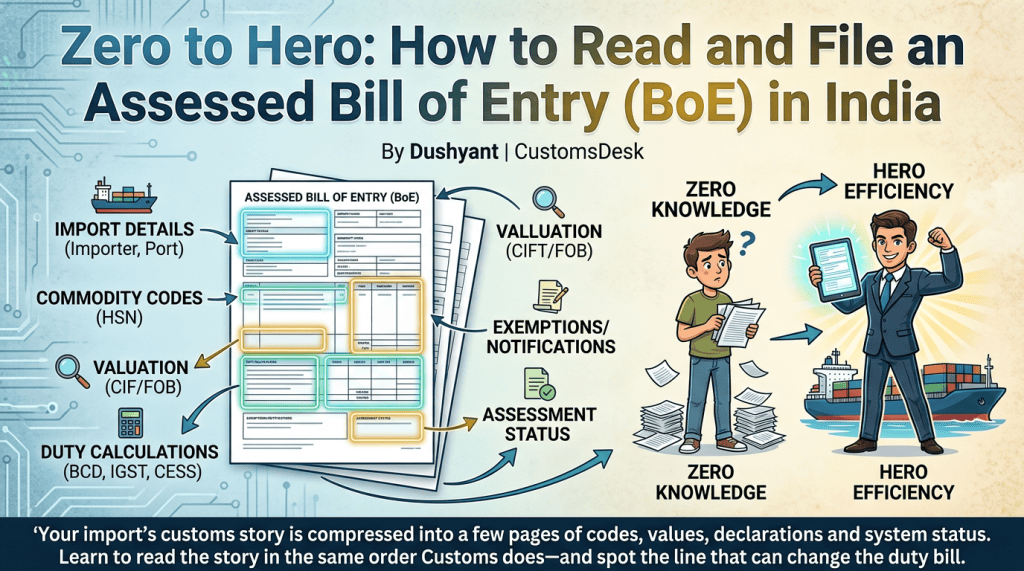
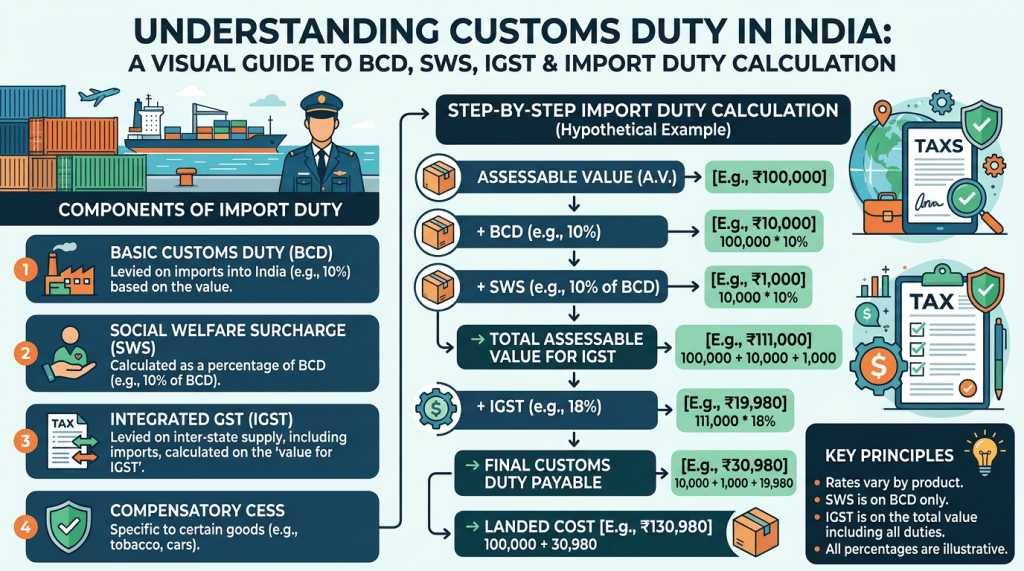
Beginner-friendly explanations of duty components, calculation concepts, exemptions and the legal framework governing imports.
Notifications, Circulars and Legal Updates
Where relevant, articles refer to official notifications, circulars, amendments and other primary sources so readers can trace the legal basis of an explanation.
Case Law and Judicial Decisions
Selected decisions of CESTAT, High Courts and the Supreme Court are discussed to explain the issues involved, the reasoning adopted and the practical significance of the outcome.
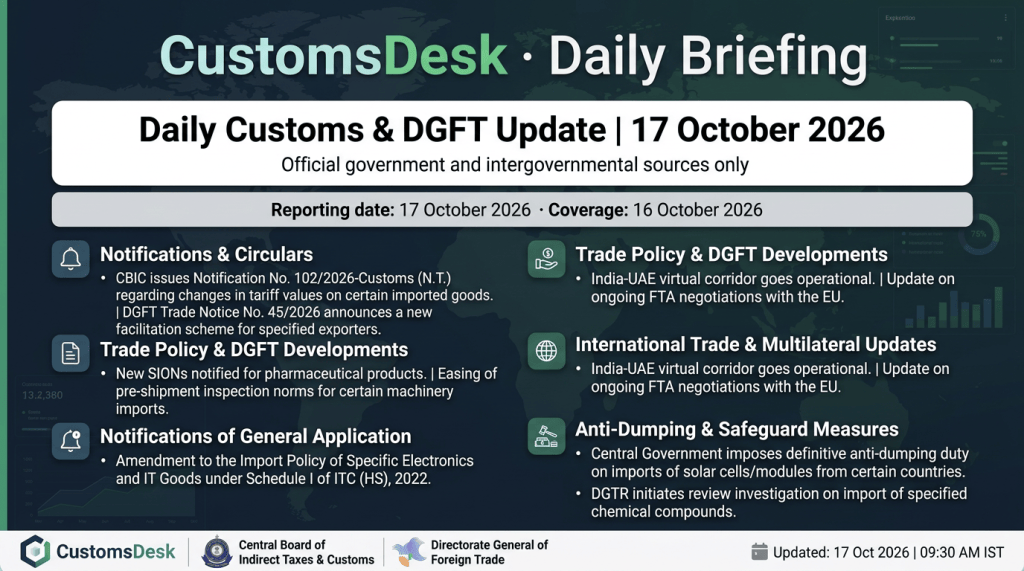
As CustomsDesk develops, I also plan to share relevant Customs-related updates, including important changes in the law, notifications, circulars and significant judicial developments. Where possible, these updates will point readers to official or primary sources so they can check the original material and understand its context.
Our Approach to Research
The objective is not simply to reproduce legal provisions. It is to make them easier to understand without losing sight of their legal meaning. Where appropriate, articles will:
- Start with the relevant legal provision.
- Explain the concept in plain English.
- Use examples or hypothetical calculations to illustrate its application.
- Refer to relevant notifications, circulars and judicial decisions.
- Link to official or primary sources wherever available.
- Identify important qualifications, conditions and limitations.
Legal decisions must be understood in their factual and statutory context. A judgment dealing with one notification or set of circumstances should not automatically be treated as a universal rule. Readers are encouraged to consult cited sources and verify the law applicable to their circumstances.
Who Is CustomsDesk For?
CustomsDesk is intended for a broad learning community, including:
- Students and beginners exploring Indian Customs law.
- Chartered Accountants, finance professionals and tax practitioners.
- Importers, exporters and trade professionals.
- Customs and compliance professionals seeking to deepen their understanding.
- Anyone interested in how Indian Customs legislation and judicial decisions work.
You do not need to be a legal expert to begin. The aim is to build understanding progressively, starting with the fundamentals and moving towards more detailed legal analysis.
A Continuing Learning Journey
Professional learning does not end with a qualification or a job title. New domains bring new questions, and those questions create opportunities to learn, investigate and improve. CustomsDesk reflects that mindset and will continue to develop as I study new provisions, explore relevant decisions and build a deeper understanding of Customs compliance.
I also have an interest in technology and technical problem-solving, particularly where they may support better research, learning and compliance processes. CustomsDesk, however, remains focused on Indian Customs law and related subjects.
Connect With Me
I welcome suggestions for topics, feedback on published articles and recommendations for useful legal sources. If there is a Customs-related topic you would like to see explained, feel free to connect.Connect on LinkedIn
Email : ca.dushyantkumar@gmail.com
Important Disclaimer
CustomsDesk is an independent educational and knowledge-sharing platform. Its articles are intended for general informational and educational purposes and should not be treated as legal, tax or Customs-clearance advice.
The application of a legal provision may depend on the facts, relevant dates, amendments, notifications and judicial interpretation applicable to a particular matter. Readers should consult the relevant primary sources and obtain appropriate professional advice where necessary.
The content published on CustomsDesk is not official guidance from any government department, employer or regulatory authority. Mention of a past or present employer describes professional history only and does not imply that the employer endorses or is affiliated with CustomsDesk.
Thank you for visiting CustomsDesk.
Let’s make Indian Customs law easier to understand, one concept at a time.
© 2026 CustomsDesk · Independent educational platform